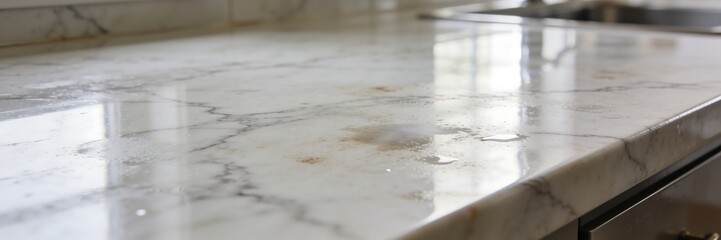
Marble adds a timeless elegance to countertops, floors, and vanities, but it is also one of the most sensitive natural stones you can own. A single glass of water left overnight or a small leak beneath a sink can leave behind cloudy rings and dull spots that seem impossible to remove. If you have been searching for how to clean water stains on marble without making the problem worse, you are in the right place. And if a leak or flood has already caused broader damage to your home, our team offers emergency restoration in Cincinnati to help you recover quickly.
The tricky part about marble is that it reacts to both moisture and acidity in ways that other surfaces do not. Understanding why stains form and which cleaning methods are safe can save you from etching, discoloration, and costly repairs. Below, we walk through the practical steps to treat water stains at home while protecting the beauty of your stone.
Why Water Leaves Marks on Marble
Marble is a porous, calcium-based stone, which means it readily absorbs liquids and reacts to anything acidic. When water sits on the surface, minerals in the water can leave behind a light-colored ring or a cloudy film. There are actually two different problems people commonly confuse. The first is a true stain, where water or minerals have soaked into the pores. The second is etching, where an acidic substance has actually eaten into the surface and left a dull, rough spot that no amount of cleaning will fully remove.
Knowing which one you are dealing with matters. A stain sits inside the stone and can often be drawn out, while etching is physical damage to the surface that may require polishing. Before you start scrubbing, run your finger over the mark. If it feels slightly rough or dull compared to the surrounding stone, you are likely dealing with etching rather than a simple water stain.
What to Avoid Before You Begin
The single most important rule when figuring out how to clean water stains on marble is to keep acidic products far away from the stone. Vinegar, lemon juice, bleach, and many general-purpose bathroom cleaners will etch marble almost instantly. These products may be safe for tile or laminate, but they cause permanent damage to natural stone.
You should also avoid abrasive scrubbing pads, steel wool, and harsh powders. These can scratch the polished finish and leave the marble looking worse than the original stain. Stick to soft microfiber cloths, gentle motions, and products specifically labeled as safe for natural stone. When in doubt, test any solution on a small, hidden area first.
How to Clean Water Stains on Marble Step by Step
For light surface stains, the process is refreshingly simple. Start by wiping the area with a soft cloth dampened with warm water and a few drops of pH-neutral dish soap or a dedicated stone cleaner. Rinse with clean water and dry thoroughly with a fresh microfiber towel. Drying is essential, because leaving moisture behind is often what caused the ring in the first place.
For stubborn stains that have soaked deeper into the stone, a poultice is your best tool. A poultice is a paste that pulls the stain up and out of the marble as it dries. Here is a straightforward approach that works for most household water and mineral stains:
- Mix baking soda with a small amount of water until it forms a thick, spreadable paste.
- Apply a layer about a quarter-inch thick directly over the stain.
- Cover the paste with plastic wrap and tape the edges down, leaving it to sit for 24 to 48 hours.
- Remove the plastic, let the paste dry completely, then gently wipe it away and rinse the area.
- Dry the surface fully and repeat if the stain has faded but not disappeared.
Patience pays off here. It is far better to repeat a gentle poultice two or three times than to reach for a harsher product that could permanently mar the finish. Once the stain is gone, buff the area with a dry microfiber cloth to restore its natural shine.
Handling Hard Water and Mineral Buildup
In many homes around Cincinnati and the surrounding areas, hard water is a frequent culprit behind marble stains. Mineral deposits from hard water leave chalky white marks, especially around faucets and shower walls. Because these deposits are alkaline rather than acidic, you cannot rely on the vinegar tricks people often suggest for glass or metal.
Instead, gently loosen mineral buildup with a stone-safe cleaner and a soft brush, working in small sections. For persistent buildup, a poultice can again help lift the residue. Going forward, wiping marble surfaces dry after each use and installing a water softener can dramatically reduce how often these stains reappear. Regular sealing also creates a protective barrier that slows down absorption and buys you time to clean up spills before they set.
Preventing Future Water Stains
The easiest stain to deal with is the one that never forms. Sealing your marble every six to twelve months is one of the most effective habits you can build. To test whether your marble needs resealing, drop a small amount of water on the surface. If it beads up, the seal is intact. If it soaks in and darkens the stone within a few minutes, it is time to reseal.
Beyond sealing, small daily habits make a big difference. Use coasters under glasses, wipe up spills promptly, and place trays under toiletries in bathrooms. Keeping marble dry is the theme that runs through everything, because moisture is what allows both stains and mineral deposits to take hold. With consistent care, your marble can stay bright and unblemished for decades.
When the Problem Goes Beyond the Surface
Sometimes water stains on marble are a warning sign of something larger, such as a hidden leak, an overflowing appliance, or moisture seeping in from a damaged roof or wall. If you notice recurring stains, warping, or a musty smell, the underlying issue may need professional attention before it spreads to flooring, cabinets, and drywall. Addressing the source early prevents mold growth and structural damage that far outweigh the cost of a single stained countertop.
That is where our team comes in. In addition to helping homeowners restore their spaces, we provide water damage restoration in Cincinnati and full-service recovery for both residential and business properties. From small leaks to major flooding, and even commercial water damage restoration in Florence, our crews are trained to find the source, dry the affected areas, and return your property to normal.
Knowing how to clean water stains on marble empowers you to handle everyday spills with confidence, but you never have to face a bigger water emergency alone. Whether you are polishing a stained vanity or dealing with the aftermath of a serious leak, gentle care and prompt action are your best defense. If water damage has moved beyond your marble and into your home or business, reach out to 1st Call Disaster Services for fast, dependable help across Cincinnati and neighboring communities.